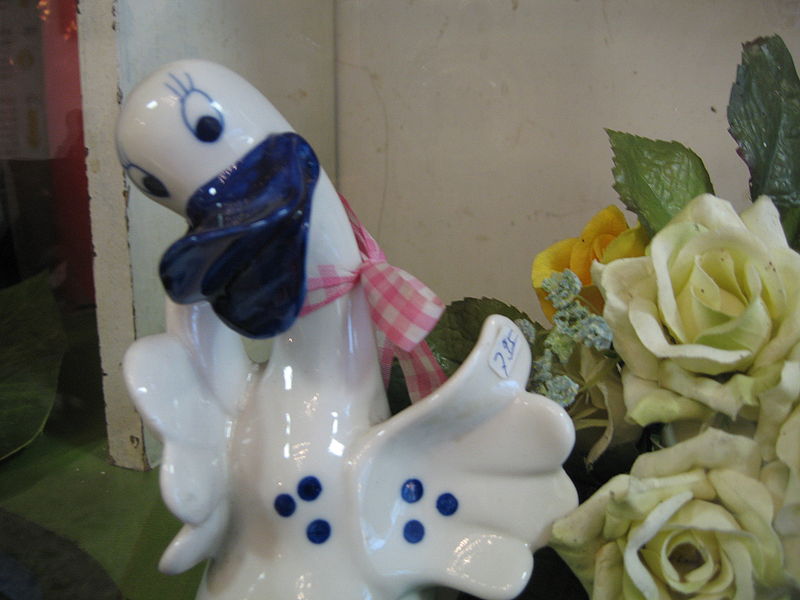
Thursday, 3 March 2011
Sunday, 6 February 2011
What Happens in Vegas (P. Goldberger)
Can you bring architectural virtue to Sin City?
In 1965, a hotel owner named Jay Sarno began construction on a new hotel on the Las Vegas Strip, and decided to set his creation apart from the competition by modelling it on a Roman palace. Caesars Palace was really no different from any other big hotel, but the Roman arches and columns stuck on its façade, not to mention the tunic-clad cocktail waitresses inside, were such a hit that the place spawned a generation of imitations, each aiming to outdo the last in eye-popping extravagance. Las Vegas became the world’s largest theme park, with hotels intended to make you feel that you are in Venice, or Paris, or Egypt, or New York, or Bellagio, or on a pirate’s island, or among King Arthur and his knights. Or—given that these weird simulacra have become famous in their own right—that you are, quite simply, in Vegas. Sarno’s palace was vulgar and crude, but his achievement is one that even the most accomplished architects can only envy: he defined a city’s style.
But it’s been clear for a while that Las Vegas has been running out of themes. The trouble is that its effects rely entirely on dazzlement, an over-the-top gigantism that gets old fast. By this point, you could do a hotel that reproduced Angkor Wat or the Aztec city of Tenochtitlan and no one would raise an eyebrow. [...] And in 2004, when the hotel company MGM Mirage (now known as MGM Resorts International) was looking for a way of filling in a sixty-six-acre site between two of its properties on the west side of the Strip (the Bellagio and the Monte Carlo), it hit on the idea of turning the plot into a showcase for modern architecture.
The complex is called CityCenter, and it is the biggest construction project in the history of Las Vegas. It has three hotels, two condominium towers, a shopping mall, a convention center, a couple of dozen restaurants, a private monorail, and a casino. [...] the project contains nearly eighteen million square feet of space, the equivalent of roughly six Empire State Buildings. [...] There are major buildings by Daniel Libeskind, Rafael Viñoly, Helmut Jahn, Pelli Clarke Pelli, Kohn Pedersen Fox, and Norman Foster; and interiors by Peter Marino, Lewis Tsurumaki Lewis, Bentel and Bentel, and AvroKO. There are also prominent sculptures by Maya Lin, Nancy Rubins, and Claes Oldenburg and Coosje van Bruggen. “The idea I wanted to convey was to bring smarter planning to the development process in Las Vegas, to expand our boundaries of knowledge,” Murren told me. “Las Vegas is always looked down upon. CityCenter is a counterpoint to the kitschiness.”
But whether Las Vegas wants to be rescued from kitsch remains to be seen. [...]
The developers are counting on these modern buildings to have the same visceral impact that visitors to Las Vegas are used to getting from make-believe historical architecture, or from Trump-style glitz. They don’t. [...] the underlying risk of the CityCenter project is that good buildings next to outlandish ones will look quiet and bland. Caesars Palace and its progeny are crass but iconic. The CityCenter buildings are sophisticated, but you wonder, finally, if they are all that memorable.
Even though there is more density to CityCenter than there is to anything else in Las Vegas, and more sophistication to its architecture, it doesn’t feel urban. [...] Indeed, as you drive around the site, you suddenly wonder if CityCenter only appears to be different from the rest of the Strip. After all, cutting-edge contemporary architecture by the likes of Libeskind and Foster has been migrating steadily into the cultural mainstream for years. Now, perhaps, it has reached the point where it is familiar enough, and likable enough, to be just another style available for imitation, like the Pyramids or Renaissance Venice. CityCenter is the Las Vegas you already know, but in modernist drag.
The Sky Line, “What Happens in Vegas,” The New Yorker, October 4, 2010, p. 95
Read more
![]() |
The CityCenter development, on the Las Vegas Strip, attempts to provide an alternative to the city’s garish architectural pastiches. Photograph by Robert Polidori. |
Sunday, 30 January 2011
On Kitsch and Sementality (Robert C. Salomon)
![]() |
| http://cdiannezweig.blogspot.com |
As the notion of "truth" requires "falsity," the very notion of "taste" in art necessitates the existence of "bad taste" and, consequently, bad art. But bad art, like falsehood, comes in many varieties and is subject to different kinds of objections. There is sheer technical incompetence, just to begin with (although artistic inability as such is much less fatal than it used to be); there is ignorance of the medium, the tradition and its history, the current fashions and the tastes of the times. For those outside the bustling art centers, what seems to be bad art may be just bad timing. There is unimaginative imitation and straightforwardp lagiarism. There is such a thing as having "no eye," the failure to understand color or composition. But there is also an "ethical" dimension to bad art, as in the depiction of the forbidden, the blasphemous, the vulgar expression of the inexpressible, the provocation of the improper and cruelty. [...]
Once upon a time, bad art was, above all, such use of unacceptable subject matter, evoking the wrong emotions and provoking the wrong reactions (e.g., visceral disgust and nausea)- but this too seems to have recently dropped out of the picture. These days, it is far wiser for an aspiring young artist to offend or disgust the viewer rather than evoke such gentle sentiments as sympathy and delight.
So this is just what is particularly interesting, from a philosophical point of view, about that peculiar variety of "bad art" called "kitsch," and, in particular, that variety of kitsch sometimes called "sweet kitsch. " Sweet kitsch is art (or, to hedge our bets, intended art) that appeals unsubtly and unapologetically to the softer, "sweeter" sentiments. [...] Examples of sweet kitsch are often mentioned as paradigm instances of bad art, but
the nature of its "badness" is just what makes kitsch philosophically interesting. [...]
What is wrong with sweet kitsch? Its deficiencies appear to be just what we would otherwise think of as virtues, technical proficiency and a well-aimed appeal to the very best of the viewer's emotions.
What is wrong with sweet kitsch, first and foremost, seems to be its sentimentality, its easy evocation of certain "sweet" emotions. But what is wrong with sentimentality,a nd sentimentality in art in particular? I think that the heart of the problem lies in our poor opinion of the motions in general and in particular the "softer" sentiments. [...]
By the end of the [19th] century, "sentimentalist" was clearly a term of ridicule and abuse, connoting superficiality, saccharine sweetness and the manipulation of mawkish emotion. Kitsch was its artistic equivalent, and artists in Paris who had been praised only a century before as the "geniuses" of Official Art became figures of loathing and ridicule in retrospect, mere curators of kitsch who produced paradigms of "bad art" which we keep in our museums only for the sake of the historians, and as contrasts to the great art of the "Refused" in the room next door. [...]
To call someone a "sentimentalist" in ethics is to dismiss both the person and his or her views from serious consideration, adding, perhaps a disdainful chortle and an implicit accusation of terminal silliness. Sentimentality is roundly condemned in the arts as well, and to call a piece "sentimental" or "kitsch" is to say that it is very bad art-if, indeed, it deserves recognition as art at all-and to cast suspicion on both its creator and its appreciative audience. [...] Kitsch and sentimentality lead to brutality. Sentimentality and kitsch reveal not only woefully inadequatea esthetic sense but a deep moral flaw of character.
What's wrong with kitsch?
I think we can narrow down the leading candidates for an argument to six: (1) the claim that kitsch and sentimentality provoke excessive or immature expressions of emotion; (2) the claim that kitsch and sentimentality manipulate our emotions; (3) the claim that kitsch and sentimentality express or evoke "false" or "faked" emotions; (4) the claim that kitsch and sentimentality express or evoke "cheap" or "easy" or "superficial" emotions; (5) the claim that kitsch and sentimentality are self-indulgent and interfere with "appropriate" behavior and, perhaps the most dominant charge; (6) the claim that kitsch and sentimentality distort our perceptions and interfere with rational thought and an adequate understanding of the world. The charge is that kitsch gives us a false and fraudulent, overly "sweet" and benign vision of the world (or certain
beings in the world, notably children and puppies) and thus somehow "blocks" our larger, nastier knowledge of the world (children and puppies too). Underlying all of these charges, indeed, is the suspicion that kitsch and sentimentality are modes of distraction and selfdeception, shifting our attention away from the world as it is and soothing us instead with objects that are uncompromisingly comfortable and utterly unthreatening. [...]
If someone responds tenderly to a little girl in a painting, is that not a good indication that they will tend to do so in the case of a real little girl? And if they respond with cold contempt to the painting, isn't that a warning, that this is a person deficient in essential human feelings? However sophisticated we may be, we respond to representational art as if the subject in question were real and actual and the way we respond to art says a great deal about how we respond to life. It is not self-indulgence that motivates us to absorb ourselves in a painting and welcome the emotions it evokes. It is part of our emotional engagement in the human drama.
Once we remove from consideration those concerns that are appropriate to art and aesthetics rather than ethics, it seems to me that the real objection to kitsch and sentimentality is the rejection (or fear) of emotions and, especially, certain kind of sentiments, variously designated as "tender" or "sweet" or "nostalgic." But the rejection extends as well to the gloomier emotions, and Karsten Harries warns us: "how easy it is to wax lyrical over despair, to wallow in it, to enjoy it. This too is kitsch, sour kitsch." Mary Midgley points out that "thrillers" have much in common with kitsch and sentimentality, for they too distort reality and manipulate emotion (though different emotions and to a very different end). So what emotions are legitimate, "true" and undistorted? Can art evoke any ordinary human emotions without being condemned as kitsch? Is there any room left in our jaded and sophisticated lives for the enjoyment of simple innocence and "sweet" affection? The trumped-up charges against kitsch and sentimentality should disturb us and make us suspicious. These attacks on the most common human sentiments-our reactions to the laughter of a child, or to the death of an infant-go far beyond the rejection of the bad art that evokes them. It is true that such matters provide a facile vehicle for second or third rate painters, but if such incidents are guaranteed to evoke emotion it is because they are indeed a virtually universal concern. The fact that we are thus "vulnerable" may make for some very bad art but this should not provoke our embarrassment at experiencing these quite "natural" sentiments ourselves, nor should it excuse the enormous amount of sophistry that is devoted to making fun of and undermining the legitimacy of such emotion.
Solomon, Robert C. (1991) "On Kitsch and Sentimentality"
The Journal of Aesthetics and Art Criticism, Vol. 49, No. 1, pp. 1-14
Blackwell Publishing on behalf of The American Society for Aesthetics
Sunday, 23 January 2011
On D. Libeskind being kitsch
"'Have you seen theTimes yet?' she asked. 'Get it, get it, get it.'
It was early in the morning and I wasn’t quite awake. Yet.
In the Times, it turned out, Herbert Muschamp had offered 'an appraisal' of the two finalists [for the Gound Zero project]. 'Taken together as a kind of shotgun diptych,' he wrote, 'the two designs... illustrate the confusion of a nation torn between the conflicting impulses of war and peace.' Shotgun diptych?
'Daniel Libeskind’s project for the World Trade Center site is a startlingly aggressive tour de force, a war memorial to a looming conflict that has scarcely begun. The THINK team’s proposal, on the other hand, offers an image of peacetime aspirations so idealistic as to seem nearly unrealizable.'While no pacifist, as a modern-day New Yorker I would like to think my way to a place beyond armed combat. ... [The THINK design] is an act of metamorphosis. It transtforms our collective memories of the twin towers into a soaring affirmation of American values.' [...]
I went back to reading. Muschamp was not remotely finished. He derided my attempt as a 'predictably kitsch result.' Whoa. That’s as low a blow as you can deliver in architecture criticism—to call something kitsch. You can say a design is ugly. That it is impractical. You can even say it’s a rip-off of another design. But don’t ever call it kitsch."
Libeskind, Daniel (2004) Breaking Ground. Adventures in Life and Architecture. New York, Riverhead Books, pp 167-168.
Imagen: futurewire.blogspot.com
Saturday, 15 January 2011
Kitsch (P. Crick)
"It is a surprise to find how, in the biological realm, the endlessly evolving forms of life appear as anticipations of distinctive forms of human social behaviour. Ignorant of the slur which we place upon them and of the effect they have upon our metaphors, parasites such as ivy, mistletoe, or the pernicious flea, pronounce the joys that can be gained just by shaping one's life around the life style of a host. Why struggle for support or food when you can get someone else to do all the hard work for you? Such is the question parasitism suggests. A refutation of the argument is hard to find.
The price which the parasite pays for its upkeep is dependence, but offered such support by a more energetic organism, all else follows. Generally, in the natural world the right degree of maintenance is forthcoming; but should the host die, then the parasite will probably follow suit. The key fact in this sort of relationship is that it is a very one-way affair, and irreversible.
In human culture, a nearly identical partnership is that which holds between Art and Kitsch. They are interinvolved, but in an irreversible mode. Lift, for example, all trace of Kitsch from a society and Art would still be able to flourish. It might, indeed, expand its range and become more successful. Extract, however, Art from the structure of a culture— prise out its nervous system—and, after a sufficient pause, any sign of Kitsch would also vanish. Perhaps in this instance the culture might vanish, too.
What, then, are the characteristics of Kitsch as a phenomenon which define and ensure its dependency on Art as the prior form ? [...]
Firstly, then, a work of art, although always the product of thought and imagination and, of course, very hard work, is not deliberative. The creative artist never sets out to calculate responses, for calculation would inevitably destroy the spontaneous character which enters into the development of the artefact. The creative act, the work of making the poem, the painting, the sculpture, does not preclude reason or reasoning; but the intellect combines with and fuses into the passionate element throughout the process, under a principle which ensures that the completed work will submit itself to an open and diverse response on the part of each differing perceiver. A work of art does not make use of its understanding of the nature of the medium being employed to control the psyche of the responding individual, as is the case in the sophisticated product of advertising on television where Kitsch photography and montage both of shot and of speech are the order of the day. Art does not seek to manipulate. It does not take up a position of power in relation to the recipient, as advertising will. It does not see the properties of the language of the medium as a weapon of approach. The artist is not self-conscious in that sense. Calculation as to effect will always mean that one who does so also calculates the precise reward of that effect. Calculation of effect is also the path to the manifestation of the sentimental. In Kitsch, deliberation and indulgence walk hand in hand, as courtier and courtesan. Flattery is its essence. [...]
Secondly, Art knows nothing of closure. The artefact may sometimes be simple; but it is never simplistic. Art does not insult the complexity of nature and of Man through an act of reduction. Nor is there any finality in a true work of art, either in its internal state, nor when it is experienced from the outside. The completed form of the work, its structural harmony, is a resolution of conflicting forces in the originator—a momentary resolution,
The third negation of Kitsch is a double negation. Art is never un-selfreferenced. Kitsch, on the other hand, bears the stamp of its own ignorance. Whenever a Kitsch product falsely offers itself as a work of art, analysis of it gives no evidence that the work anywhere knows itself to be a work of art. The authentic work knows itself to be such because the creator of it discovers as he goes along that he is a maker of the new (and not just the maker of a novelty). There is always concrete evidence within a work of art of a technical kind which will show on inspection that not only is the artist engaged in a search but that he is searching with a method which is provisional in its essence. Moreover, this note of provisionality always enters into the expressive form which the act of search takes. Such an attitude shows what it means to assert that a work of art is self-aware. It is just one step beyond this from self-awareness to self-reference. Selfawareness of this tentative order ensures that the work of art will indirectly comment upon its own use of the medium. It will show itself to exist in a state of tension with its own technical means, and its own specific cultural inheritance.
A further aspect of the self-referencing function resides in the fact that a work of art, simply by existing in its 'resolved' state, can be seen by observers to relate both to past works by the same artist, and to those which will emerge in the future. The relationship articulates the general quest of that artist. Kitsch can never exemplify either search or quest in this sense. The third great difference between Art and Kitsch occurs in the sphere
of decoration. Art is not self-indulgently decorative. In a Kitsch product, there is no inner formal necessity between the ornamental element and motif. The decoration is used simply as cosmetic to whatever is being
centrally presented. [...]
The last and fifth major contrastive difference between the two modes of making is to some extent a continuation by other means of the issue of decoration. A work of art, if looked at in terms of its rituahstic aspect, is never ritualistic without substance. The ritualism of Kitsch, however, gives full reign to the resources of human fancy and fantasy without regard to the traditional base of accredited ritual. The authenticity of the ritual domain in Art is derived from its historical validity—the ideological validity of the field of ritual reference at the time at which any given work of art invoking it is made. A work of art can, of course, evoke past ritualistic forms, not (as may be the case) as quotation, but rather in the form of celebrating the climate of a previous epoch and its value-system. But whenever that happens, it will treat the material referred to in the language of the present and not just naively import the ritual mode unaltered. Kitsch imports, and borrows, intact. Art alludes, and transforms. [...]
Today, Kitsch is the flourishing formula of a mass culture. Its presence can be detected in every social practice from religion, through all mediacommercials, to athletics, even. Kitsch is the great hedonist vehicle of our time, a parasite now grown to leviathan maturity, while the host on which it feeds remains comparatively small. But to this depressing fact there is an opposing optimistic parable. In certain Latin American countries, the scourge of extreme poverty has brought into being a type of artistcraftsman, who lacking all plant or technology has taken to recycling chosen items of garbage (Strassenschlamm) into new and beautiful and useful individualized products, such as oil-lamps, which' are sold at local street-markets. They are sold not (yet) to tourists, but to ordinary local people.
This model of creative courage in which an innovation drawn from the uninviting gutter of industrial waste breeds beauty alongside utility, has something in common with the way in which Western artists have taken up facets of the enormous Kitsch output in their own culture and through a deft act of allusive irony incorporated them into fresh aesthetic statements. Modem art therefore engages in a crucial if low-key dialogue with its feverish parasite. On each occasion where that irony is manifested a work of art becomes a work of criticism, and a work of criticism becomes a work of art.
Crick, Philip (1983) "Kitsch". In: British Journal of Aesthetics, vol. 23, no. 1.
Wednesday, 5 January 2011
Architecture in Everyday Life (D. Upton)
"The everyday comprises 'seemingly unimportant activities'. Or it is 'a set of functions which connect and join together systems that might appear to be distinct' (Lefebvre) [...].
For one architect, 'The everyday is that which remains after one has eliminated all specialized activities' (Harris). According to another, everyday space lies 'in between such defined and physically definable realms as the home, the workplace, and the institution, [it] is the connective tissue that binds everyday lives together' (Crawford) [...].

Architecture is inescapably concrete and it forms the fabric and the setting of everyday life. Consequently, to approach everyday life through architecture - architecture with a lower-case a, understood in its broadest sense to encompass the entire material world (or "cultural landscape") that people make and think - is to be forced to pin down, in ways too often lacking in theories of the quotidian, the precise ways in which everyday life is experienced and the specifics of its relationships to other aspects of life and landscape. So architecture's materiality makes it a natural conduit to the specificity of everyday life. [...]
Unlike, say, literary critics or sociologists, who study the works, actions, and values of other people at a distance, builders intervene directly in everyday life. This means that architects must examine their own professional practices and social identities as well as those of the people for whom they build. This habit of self-scrutiny long antedated Architectural interest in the everyday, so called. Since the beginnings of European-American professionalization two centuries ago, architects (expanding that term to include landscape architects and urban designers) have struggled to differentiate themselves from builders and clients and to establish a clear social identity that would give them the cultural authority to dominate the building market and control the shaping of the landscape. They have failed. Many nonarchitects - builders, clients, critics - continue to claim some authoritative knowledge of the field and decline to grant architects the absolute authority they seek. [...]
The idea of the everyday forces us to acknowledge that Architecture is part of architecture, that designers are a part of the everyday world, not explorers from a more civilized society or detached doers for clients and to cities."
Upton, Dell (2002) "Architecture in Everyday Life". In: New Literary History, Vol. 33, No. 4, pp. 707-723. The Johns Hopkins University Press.
Sunday, 2 January 2011
Etymology of Kitsch (O. F. Best)
- Kitsch is a synonym of Kolportage (cheap sensationalism / trash, rubbish / peddling).
- Ketschen / schleppen / schleifen : to draw, to tow.
- Kitschen is used as the verbs verpassen and verschwenden (to fritter away / to waste), but also means "to negotiate on a small scale and to sell in an artful way.
Wednesday, 29 December 2010
Constructing the Modern Movement (H. Heynen)
"The phenomenon of the artistic avant-garde is historically linked to the rise of kitsch. Both avant-garde and kitsch can be seen as reactions to the experience of fissure that is typical of modernity. The accelerated changes in traditional values and living conditions that are brought about by modernity lead individuals to experience a split between their inner world and the behavior patterns required of them by society. Modern individuals experience themselves as “rootless”: they are not in harmony with themselves and they lack the self-evident frame of reference of norms and forms that one has in a society where tradition prevails. That at least is the diagnosis shared by a whole range of intellectuals writing on modernity.At the beginning of the twentieth century it was clearly stated, by Adolf Loos among others, that it was the task of intellectuals and artists to face this fissure and to look for a new basis of culture, because culture could no longer be established on a self-evident continuation of tradition. The space left vacant by the decline of tradition was laid claim to by the avant-garde that regarded itself as “the only living culture we now have.” (C. Greenberg, 1939) As against the pseudo-values of kitsch, the avant-garde posited the ideals of purity and authenticity. Kitsch, they argued, is pleasant; it focuses on easy entertainment; it is mechanical, academic, and cliché-ridden. Because of this it glosses over the effects of the split character of modern life: kitsch maintains an illusion of wholeness by which individuals can painlessly forget their inner conflicts. The avant-garde, on the other hand, refuses to deny these conflicts by ignoring the fissures and ruptures that do exist—rather it combats them openly. The strategy of the avant-garde thus consisted of a direct attack: perceiving that outer forms no longer correspond to inner feelings, the avant-garde chooses to destroy these forms in order to expose their hollowness. Therefore, it is constantly engaged in an iconoclastic struggle. Marinetti’s appeal, “Let us kill the moonlight!” can serve as a model for the logic of negation that the avant-garde advocates: all norms, forms, and conventions have to be broken; everything that is stable must be rejected, every value negated.
In doing so the avant-garde radicalizes the basic principle of modernity—the urge toward continual change and development, the rejection of the old and the longing for what is new. In its historical manifestations—futurism, constructivism, dadaism, surrealism, and kindred movements—it represents a “spearhead” of aesthetic modernism, which in itself can be said to have a broader basis (not every modernist writer or artist belongs unquestionably to the avant-garde). Renato Poggioli characterized the avant-garde by four moments: activism, antagonism, nihilism, and agonism (Poggioli, 1982). The activist moment meant adventure and dynamism, an urge to action not necessarily linked to a positive goal. The antagonistic character of the avantgarde refers to its combativeness; the avant-garde is always complaining, it wages a continuous struggle—against tradition, against the public, and against the establishment. This antagonism goes hand in hand with an anarchistic aversion to all rules and norms, a revulsion against every institutionalized system. Activism and antagonism are pursued in a way that is so absolute that an avant-garde movement finally overtakes itself in a nihilistic quest, in an uninterrupted search for purity, ending up by dissolving into nothing. The avant-garde is indeed inclined to sacrifice itself on the altar of cultural advance—if the price of obtaining mastery over the future is one’s own destruction, it is fully prepared to pay it. It is in this masochism that what Poggioli calls the agonistic phase lies: it wallows pathetically in morbid pleasure at the prospect of its own downfall, in the conviction that it is there that it will find its supreme fulfillment. In so doing it also complies with the military metaphor implicit in its name: it is the fate of the avant-garde to be slaughtered so that others will have the opportunity to build after them."
Heynen, Hilde: Architecture and Modernity. A Critique. MIT Press, Cambridge. pp 26-28
Thursday, 23 December 2010
Camp Rules (P. Core)
CAMP depends on where you pitch it.
CAMP is character limited to context.
CAMP is in the eyes of the beholder, especially if the beholder is camp.
CAMP is a form of historicism viewed histrionically.
CAMP is not necessarily homosexual. Anyone or anything can be camp. But it takes one to know one.
CAMP was a prison for an illegal minority; now it is a holiday for consenting adults.
CAMP is first of all a second childhood.
CAMP is essential to military discipline.
CAMP is a biography written by the subject as if it were about another person.
CAMP is a disguise that fails.CAMP is free association; free thinking is not camp.
CAMP is in the eyes of the beholder, especially if the beholder is camp.
CAMP is a form of historicism viewed histrionically.
CAMP is not necessarily homosexual. Anyone or anything can be camp. But it takes one to know one.
CAMP was a prison for an illegal minority; now it is a holiday for consenting adults.
CAMP is first of all a second childhood.
CAMP is essential to military discipline.
CAMP is a biography written by the subject as if it were about another person.
CAMP is a disguise that fails.CAMP is free association; free thinking is not camp.
CAMP is a lifeboat for men at sea.

CAMP is Royalism, Diabolism and British Socialism.
CAMP is moral anarchy which makes room for the self without altering the attitudes of society.
CAMP is an ephemeral fundamental.
CAMP is cross-dressing in a Freudian slip.
CAMP is laughing at The Importance of Being Earnest without knowing why.
CAMP is laughing at The Importance of Being Earnest and knowing why.
CAMP is an art without artists.
CAMP is anti-art in the same way physical desire is anti-creative.
CAMP is a lie which tells the truth.
CAMP is behaving illegally with impunity; Hemingway defined it perfectly as 'grace under pressure.'
CAMP is embarrassment without cowardice.
CAMP is gender without genitals.
Core, Philip (1984) Camp. The Lie That Tells the Truth. Delilah Books, New York.
CAMP is laughing at The Importance of Being Earnest without knowing why.
CAMP is laughing at The Importance of Being Earnest and knowing why.
CAMP is an art without artists.
CAMP is anti-art in the same way physical desire is anti-creative.
CAMP is a lie which tells the truth.
CAMP is behaving illegally with impunity; Hemingway defined it perfectly as 'grace under pressure.'
CAMP is embarrassment without cowardice.
CAMP is gender without genitals.
Core, Philip (1984) Camp. The Lie That Tells the Truth. Delilah Books, New York.
Monday, 29 November 2010
Pastiche (II)
"Literally, 'pasticcio', derived from Common Romance pasta denoted in early modern Italian a pâté of various ingredients - a hodgepodge of meat, vegetables, eggs, and a variety of other possible additions (Battaglia, 1984: 791). In the wake of the Renaissance, the art scene grabbed 'pasticcio' as a metaphor to describe a genre of painting of questionable quality that was the product of a 'pittore aclettico che dipinge con tecniche e stili diversi' (an eclectic paiter who drew upon diverse techniques and styles; Battaglia 1984: 790). Pasticcio was highly imitative painting that synthesized - 'stirred together' - the styles of major artists, often with seemingly fraudulent intention, i.e., to deceive viewers and patrons.
The slippery quality associated with the pastiche genre is in part due to the dual structural profile that was there from the outset: imitation of a masterwork and the 'pâté' of components. Vagueness of image also continues to be part of the genre's discourse history, because certain qualities and features of the pastiche mode overlap with other aesthetic categories. We are dealing with a vast semantic field in which such superimpositions of genre and mode come about as a result of cultural perceptions and conceptual traditions." (pp 1, 9)
Hoesterey, Ingeborg (2001) Pastiche. Cultural Memory in Art, Film, Literature. Indiana University Press.
Monday, 1 November 2010
Notes on "Camp" II (S. Sontag)
26. Camp is art that proposes itself seriously, but cannot be taken altogether seriously because it is "too much." [...]
27. A work can come close to Camp, but not make it, because it succeeds. Eisenstein's films are seldom Camp because, despite all exaggeration, they do succeed (dramatically) without surplus. If they were a little more "off," they could be great Camp - particularly Ivan the Terrible I & II. The same for Blake's drawings and paintings, weird and mannered as they are. They aren't Camp; though Art Nouveau, influenced by Blake, is. What is extravagant in an inconsistent or an unpassionate way is not Camp. Neither can anything be Camp that does not seem to spring from an irrepressible, a virtually uncontrolled sensibility. Without passion, one gets pseudo-Camp -- what is merely decorative, safe, in a word, chic. On the barren edge of Camp lie a number of attractive things: the sleek fantasies of Dali, the haute couture preciosity of Albicocco's The Girl with the Golden Eyes. But the two things - Camp and preciosity - must not be confused.
28. Again, Camp is the attempt to do something extraordinary. But extraordinary in the sense, often, of being special, glamorous. (The curved line, the extravagant gesture.) Not extraordinary merely in the sense of effort. Ripley's Believe-It-Or-Not items are rarely campy. These items [...] lack the visual reward - the glamour, the theatricality - that marks off certain extravagances as Camp.
27. A work can come close to Camp, but not make it, because it succeeds. Eisenstein's films are seldom Camp because, despite all exaggeration, they do succeed (dramatically) without surplus. If they were a little more "off," they could be great Camp - particularly Ivan the Terrible I & II. The same for Blake's drawings and paintings, weird and mannered as they are. They aren't Camp; though Art Nouveau, influenced by Blake, is. What is extravagant in an inconsistent or an unpassionate way is not Camp. Neither can anything be Camp that does not seem to spring from an irrepressible, a virtually uncontrolled sensibility. Without passion, one gets pseudo-Camp -- what is merely decorative, safe, in a word, chic. On the barren edge of Camp lie a number of attractive things: the sleek fantasies of Dali, the haute couture preciosity of Albicocco's The Girl with the Golden Eyes. But the two things - Camp and preciosity - must not be confused.
28. Again, Camp is the attempt to do something extraordinary. But extraordinary in the sense, often, of being special, glamorous. (The curved line, the extravagant gesture.) Not extraordinary merely in the sense of effort. Ripley's Believe-It-Or-Not items are rarely campy. These items [...] lack the visual reward - the glamour, the theatricality - that marks off certain extravagances as Camp.
30. Of course, the canon of Camp can change. Time has a great deal to do with it. Time may enhance what seems simply dogged or lacking in fantasy now because we are too close to it, because it resembles too closely our own everyday fantasies, the fantastic nature of which we don't perceive. We are better able to enjoy a fantasy as fantasy when it is not our own.
31. This is why so many of the objects prized by Camp taste are old-fashioned, out-of-date, démodé. It's not a love of the old as such. It's simply that the process of aging or deterioration provides the necessary detachment -- or arouses a necessary sympathy. When the theme is important, and contemporary, the failure of a work of art may make us indignant. Time can change that. Time liberates the work of art from moral relevance, delivering it over to the Camp sensibility... Another effect: time contracts the sphere of banality. (Banality is, strictly speaking, always a category of the contemporary.) What was banal can, with the passage of time, become fantastic. […] things are campy, not when they become old - but when we become less involved in them, and can enjoy, instead of be frustrated by, the failure of the attempt. But the effect of time is unpredictable.
[…]
34. Camp taste turns its back on the good-bad axis of ordinary aesthetic judgment. Camp doesn't reverse things. It doesn't argue that the good is bad, or the bad is good. What it does is to offer for art (and life) a different -- a supplementary -- set of standards.
35. Ordinarily we value a work of art because of the seriousness and dignity of what it achieves. We value it because it succeeds - in being what it is and, presumably, in fulfilling the intention that lies behind it. We assume a proper, that is to say, straightforward relation between intention and performance. By such standards, we appraise […] the pantheon of high culture: truth, beauty, and seriousness.
![]() |
| Camp deco (www.apartmenttherapy.com) |
36. But there are other creative sensibilities besides the seriousness (both tragic and comic) of high culture and of the high style of evaluating people. And one cheats oneself, as a human being, if one has respect only for the style of high culture, whatever else one may do or feel on the sly. For instance, there is the kind of seriousness whose trademark is anguish, cruelty, derangement. Here we do accept a disparity between intention and result. I am speaking, obviously, of a style of personal existence as well as of a style in art; but the examples had best come from art. Think of Bosch, Sade, Rimbaud, Jarry, Kafka, Artaud, think of most of the important works of art of the 20th century, that is, art whose goal is not that of creating harmonies but of overstraining the medium and introducing more and more violent, and unresolvable, subject-matter. This sensibility also insists on the principle that an oeuvre in the old sense (again, in art, but also in life) is not possible. Only "fragments" are possible... Clearly, different standards apply here than to traditional high culture. Something is good not because it is achieved, but because another kind of truth about the human situation, another experience of what it is to be human - in short, another valid sensibility -- is being revealed. And third among the great creative sensibilities is Camp: the sensibility of failed seriousness, of the theatricalization of experience. Camp refuses both the harmonies of traditional seriousness, and the risks of fully identifying with extreme states of feeling.
37. The first sensibility, that of high culture, is basically moralistic. The second sensibility, that of extreme states of feeling, represented in much contemporary "avant-garde" art, gains power by a tension between moral and aesthetic passion. The third, Camp, is wholly aesthetic.
38. Camp is the consistently aesthetic experience of the world. It incarnates a victory of "style" over "content," "aesthetics" over "morality," of irony over tragedy.
[…]
41. The whole point of Camp is to dethrone the serious. Camp is playful, anti-serious. More precisely, Camp involves a new, more complex relation to "the serious." One can be serious about the frivolous, frivolous about the serious.
42. One is drawn to Camp when one realizes that "sincerity" is not enough. Sincerity can be simple philistinism, intellectual narrowness.
43. The traditional means for going beyond straight seriousness - irony, satire - seem feeble today, inadequate to the culturally oversaturated medium in which contemporary sensibility is schooled. Camp introduces a new standard: artifice as an ideal, theatricality.
44. Camp proposes a comic vision of the world. But not a bitter or polemical comedy. If tragedy is an experience of hyperinvolvement, comedy is an experience of underinvolvement, of detachment. "I adore simple pleasures, they are the last refuge of the complex." - A Woman of No Importance
45. Detachment is the prerogative of an elite; and as the dandy is the 19th century's surrogate for the aristocrat in matters of culture, so Camp is the modern dandyism. Camp is the answer to the problem: how to be a dandy in the age of mass culture.
[…]
47. Wilde himself is a transitional figure. The man who, when he first came to London, sported a velvet beret, lace shirts, velveteen knee-breeches and black silk stockings, could never depart too far in his life from the pleasures of the old-style dandy; this conservatism is reflected in The Picture of Dorian Gray. But many of his attitudes suggest something more modern. It was Wilde who formulated an important element of the Camp sensibility -- the equivalence of all objects -- when he announced his intention of "living up" to his blue-and-white china, or declared that a doorknob could be as admirable as a painting. When he proclaimed the importance of the necktie, the boutonniere, the chair, Wilde was anticipating the democratic esprit of Camp.
48. The old-style dandy hated vulgarity. The new-style dandy, the lover of Camp, appreciates vulgarity. Where the dandy would be continually offended or bored, the connoisseur of Camp is continually amused, delighted. The dandy held a perfumed handkerchief to his nostrils and was liable to swoon; the connoisseur of Camp sniffs the stink and prides himself on his strong nerves.
49. It is a feat, of course. A feat goaded on, in the last analysis, by the threat of boredom. The relation between boredom and Camp taste cannot be overestimated. Camp taste is by its nature possible only in affluent societies, in societies or circles capable of experiencing the psychopathology of affluence. "What is abnormal in Life stands in normal relations to Art. It is the only thing in Life that stands in normal relations to Art." - A Few Maxims for the Instruction of the Over-Educated
[…]
54. The experiences of Camp are based on the great discovery that the sensibility of high culture has no monopoly upon refinement. Camp asserts that good taste is not simply good taste; that there exists, indeed, a good taste of bad taste. (Genet talks about this in Our Lady of the Flowers.) The discovery of the good taste of bad taste can be very liberating. The man who insists on high and serious pleasures is depriving himself of pleasure; he continually restricts what he can enjoy; in the constant exercise of his good taste he will eventually price himself out of the market, so to speak. Here Camp taste supervenes upon good taste as a daring and witty hedonism. It makes the man of good taste cheerful, where before he ran the risk of being chronically frustrated. It is good for the digestion.
55. Camp taste is, above all, a mode of enjoyment, of appreciation - not judgment. Camp is generous. It wants to enjoy. It only seems like malice, cynicism. (Or, if it is cynicism, it's not a ruthless but a sweet cynicism.) Camp taste doesn't propose that it is in bad taste to be serious; it doesn't sneer at someone who succeeds in being seriously dramatic. What it does is to find the success in certain passionate failures.
56. Camp taste is a kind of love, love for human nature. It relishes, rather than judges, the little triumphs and awkward intensities of "character."... Camp taste identifies with what it is enjoying. People who share this sensibility are not laughing at the thing they label as "a camp," they're enjoying it. Camp is a tender feeling. (Here, one may compare Camp with much of Pop Art, which -- when it is not just Camp -- embodies an attitude that is related, but still very different. Pop Art is more flat and more dry, more serious, more detached, ultimately nihilistic.)
57. Camp taste nourishes itself on the love that has gone into certain objects and personal styles. The absence of this love is the reason why such kitsch items as Peyton Place (the book) and the Tishman Building aren't Camp.
58. The ultimate Camp statement: it's good because it's awful... Of course, one can't always say that. Only under certain conditions, those which I've tried to sketch in these notes.
Monday, 25 October 2010
Notes on "Camp" I (S. Sontag)
Published in 1964.
Many things in the world have not been named; and many things, even if they have been named, have never been described. One of these is the sensibility -- unmistakably modern, a variant of sophistication but hardly identical with it -- that goes by the cult name of "Camp."
A sensibility (as distinct from an idea) is one of the hardest things to talk about; but there are special reasons why Camp, in particular, has never been discussed. It is not a natural mode of sensibility, if there be any such. Indeed the essence of Camp is its love of the unnatural: of artifice and exaggeration. And Camp is esoteric -- something of a private code, a badge of identity even, among small urban cliques. Apart from a lazy two-page sketch in Christopher Isherwood's novel The World in the Evening (1954), it has hardly broken into print. To talk about Camp is therefore to betray it. If the betrayal can be defended, it will be for the edification it provides, or the dignity of the conflict it resolves. For myself, I plead the goal of self-edification, and the goad of a sharp conflict in my own sensibility. I am strongly drawn to Camp, and almost as strongly offended by it. That is why I want to talk about it, and why I can. For no one who wholeheartedly shares in a given sensibility can analyze it; he can only, whatever his intention, exhibit it. To name a sensibility, to draw its contours and to recount its history, requires a deep sympathy modified by revulsion.
![]() |
| Leonardo chairs (arquitecturas.files.wordpress.com) |
Though I am speaking about sensibility only -- and about a sensibility that, among other things, converts the serious into the frivolous -- these are grave matters. Most people think of sensibility or taste as the realm of purely subjective preferences, those mysterious attractions, mainly sensual, that have not been brought under the sovereignty of reason. They allow that considerations of taste play a part in their reactions to people and to works of art. But this attitude is naïve. And even worse. To patronize the faculty of taste is to patronize oneself. For taste governs every free -- as opposed to rote -- human response. Nothing is more decisive. There is taste in people, visual taste, taste in emotion - and there is taste in acts, taste in morality. Intelligence, as well, is really a kind of taste: taste in ideas. (One of the facts to be reckoned with is that taste tends to develop very unevenly. It's rare that the same person has good visual taste and good taste in people and taste in ideas.)
Taste has no system and no proofs. But there is something like a logic of taste: the consistent sensibility which underlies and gives rise to a certain taste. A sensibility is almost, but not quite, ineffable. Any sensibility which can be crammed into the mold of a system, or handled with the rough tools of proof, is no longer a sensibility at all. It has hardened into an idea...
1. To start very generally: Camp is a certain mode of aestheticism. It is one way of seeing the world as an aesthetic phenomenon. That way, the way of Camp, is not in terms of beauty, but in terms of the degree of artifice, of stylization.
2. To emphasize style is to slight content, or to introduce an attitude which is neutral with respect to content. It goes without saying that the Camp sensibility is disengaged, depoliticized -- or at least apolitical.
3. Not only is there a Camp vision, a Camp way of looking at things. Camp is as well a quality discoverable in objects and the behavior of persons. There are "campy" movies, clothes, furniture, popular songs, novels, people, buildings. . . . This distinction is important. True, the Camp eye has the power to transform experience. But not everything can be seen as Camp. It's not all in the eye of the beholder.
[...]
5. Camp taste has an affinity for certain arts rather than others. Clothes, furniture, all the elements of visual décor, for instance, make up a large part of Camp. For Camp art is often decorative art, emphasizing texture, sensuous surface, and style at the expense of content. Concert music, though, because it is contentless, is rarely Camp. It offers no opportunity, say, for a contrast between silly or extravagant content and rich form. . . . Sometimes whole art forms become saturated with Camp. Classical ballet, opera, movies have seemed so for a long time. In the last two years, popular music (post rock-'n'-roll, what the French call yé yé) has been annexed. And movie criticism (like lists of "The 10 Best Bad Movies I Have Seen") is probably the greatest popularizer of Camp taste today, because most people still go to the movies in a high-spirited and unpretentious way.
6. There is a sense in which it is correct to say: "It's too good to be Camp." Or "too important," not marginal enough. (More on this later.) Thus, the personality and many of the works of Jean Cocteau are Camp, but not those of André Gide; the operas of Richard Strauss, but not those of Wagner; concoctions of Tin Pan Alley and Liverpool, but not jazz.Many examples of Camp are things which, from a "serious" point of view, are either bad art or kitsch.
[...]
7. All Camp objects, and persons, contain a large element of artifice. Nothing in nature can be campy... Rural Camp is still man-made, and most campy objects are urban. (Yet, they often have a serenity -- or a naiveté -- which is the equivalent of pastoral. A great deal of Camp suggests Empson's phrase, "urban pastoral.")
8. Camp is a vision of the world in terms of style -- but a particular kind of style. It is the love of the exaggerated, the "off," of things-being-what-they-are-not. The best example is in Art Nouveau, the most typical and fully developed Camp style. Art Nouveau objects, typically, convert one thing into something else: the lighting fixtures in the form of flowering plants, the living room which is really a grotto. A remarkable example: the Paris Métro entrances designed by Hector Guimard in the late 1890s in the shape of cast-iron orchid stalks.
[...]
12. The question isn't, "Why travesty, impersonation, theatricality?" The question is, rather, "When does travesty, impersonation, theatricality acquire the special flavor of Camp?" Why is the atmosphere of Shakespeare's comedies (As You Like It, etc.) not epicene, while that of Der Rosenkavalier is?
13. The dividing line seems to fall in the 18th century; there the origins of Camp taste are to be found (Gothic novels, Chinoiserie, caricature, artificial ruins, and so forth.) But the relation to nature was quite different then. In the 18th century, people of taste either patronized nature (Strawberry Hill) or attempted to remake it into something artificial (Versailles). They also indefatigably patronized the past. Today's Camp taste effaces nature, or else contradicts it outright. And the relation of Camp taste to the past is extremely sentimental. 1
4. A pocket history of Camp might, of course, begin farther back -- with the mannerist artists like Pontormo, Rosso, and Caravaggio, or the extraordinarily theatrical painting of Georges de La Tour, or Euphuism (Lyly, etc.) in literature. Still, the soundest starting point seems to be the late 17th and early 18th century, because of that period's extraordinary feeling for artifice, for surface, for symmetry; its taste for the picturesque and the thrilling, its elegant conventions for representing instant feeling and the total presence of character -- the epigram and the rhymed couplet (in words), the flourish (in gesture and in music). [...]
16. Thus, the Camp sensibility is one that is alive to a double sense in which some things can be taken. But this is not the familiar split-level construction of a literal meaning, on the one hand, and a symbolic meaning, on the other. It is the difference, rather, between the thing as meaning something, anything, and the thing as pure artifice.
17. This comes out clearly in the vulgar use of the word Camp as a verb, "to camp," something that people do. To camp is a mode of seduction -- one which employs flamboyant mannerisms susceptible of a double interpretation; gestures full of duplicity, with a witty meaning for cognoscenti and another, more impersonal, for outsiders. Equally and by extension, when the word becomes a noun, when a person or a thing is "a camp," a duplicity is involved. Behind the "straight" public sense in which something can be taken, one has found a private zany experience of the thing. "To be natural is such a very difficult pose to keep up." - An Ideal Husband
18. One must distinguish between naïve and deliberate Camp. Pure Camp is always naive. Camp which knows itself to be Camp ("camping") is usually less satisfying.
19. The pure examples of Camp are unintentional; they are dead serious. The Art Nouveau craftsman who makes a lamp with a snake coiled around it is not kidding, nor is he trying to be charming. He is saying, in all earnestness: Voilà! the Orient! Genuine Camp does not mean to be funny. Camping does. [...]
20. Probably, intending to be campy is always harmful. [...]
21. So, again, Camp rests on innocence. That means Camp discloses innocence, but also, when it can, corrupts it. Objects, being objects, don't change when they are singled out by the Camp vision. Persons, however, respond to their audiences. [...]
22. Considered a little less strictly, Camp is either completely naive or else wholly conscious (when one plays at being campy). An example of the latter: Wilde's epigrams themselves. "It's absurd to divide people into good and bad. People are either charming or tedious." - Lady Windemere's Fan
23. In naïve, or pure, Camp, the essential element is seriousness, a seriousness that fails. Of course, not all seriousness that fails can be redeemed as Camp. Only that which has the proper mixture of the exaggerated, the fantastic, the passionate, and the naïve.
24. When something is just bad (rather than Camp), it's often because it is too mediocre in its ambition. The artist hasn't attempted to do anything really outlandish. ("It's too much," "It's too fantastic," "It's not to be believed," are standard phrases of Camp enthusiasm.)
25. The hallmark of Camp is the spirit of extravagance. Camp is a woman walking around in a dress made of three million feathers. Camp is the paintings of Carlo Crivelli, with their real jewels and trompe-l'oeil insects and cracks in the masonry. [...] In Camp there is often something démesuré in the quality of the ambition, not only in the style of the work itself. Gaudí's lurid and beautiful buildings in Barcelona are Camp not only because of their style but because they reveal -- most notably in the Cathedral of the Sagrada Familia -- the ambition on the part of one man to do what it takes a generation, a whole culture to accomplish.
2. To emphasize style is to slight content, or to introduce an attitude which is neutral with respect to content. It goes without saying that the Camp sensibility is disengaged, depoliticized -- or at least apolitical.
3. Not only is there a Camp vision, a Camp way of looking at things. Camp is as well a quality discoverable in objects and the behavior of persons. There are "campy" movies, clothes, furniture, popular songs, novels, people, buildings. . . . This distinction is important. True, the Camp eye has the power to transform experience. But not everything can be seen as Camp. It's not all in the eye of the beholder.
[...]
5. Camp taste has an affinity for certain arts rather than others. Clothes, furniture, all the elements of visual décor, for instance, make up a large part of Camp. For Camp art is often decorative art, emphasizing texture, sensuous surface, and style at the expense of content. Concert music, though, because it is contentless, is rarely Camp. It offers no opportunity, say, for a contrast between silly or extravagant content and rich form. . . . Sometimes whole art forms become saturated with Camp. Classical ballet, opera, movies have seemed so for a long time. In the last two years, popular music (post rock-'n'-roll, what the French call yé yé) has been annexed. And movie criticism (like lists of "The 10 Best Bad Movies I Have Seen") is probably the greatest popularizer of Camp taste today, because most people still go to the movies in a high-spirited and unpretentious way.
6. There is a sense in which it is correct to say: "It's too good to be Camp." Or "too important," not marginal enough. (More on this later.) Thus, the personality and many of the works of Jean Cocteau are Camp, but not those of André Gide; the operas of Richard Strauss, but not those of Wagner; concoctions of Tin Pan Alley and Liverpool, but not jazz.Many examples of Camp are things which, from a "serious" point of view, are either bad art or kitsch.
[...]
7. All Camp objects, and persons, contain a large element of artifice. Nothing in nature can be campy... Rural Camp is still man-made, and most campy objects are urban. (Yet, they often have a serenity -- or a naiveté -- which is the equivalent of pastoral. A great deal of Camp suggests Empson's phrase, "urban pastoral.")
8. Camp is a vision of the world in terms of style -- but a particular kind of style. It is the love of the exaggerated, the "off," of things-being-what-they-are-not. The best example is in Art Nouveau, the most typical and fully developed Camp style. Art Nouveau objects, typically, convert one thing into something else: the lighting fixtures in the form of flowering plants, the living room which is really a grotto. A remarkable example: the Paris Métro entrances designed by Hector Guimard in the late 1890s in the shape of cast-iron orchid stalks.
[...]
12. The question isn't, "Why travesty, impersonation, theatricality?" The question is, rather, "When does travesty, impersonation, theatricality acquire the special flavor of Camp?" Why is the atmosphere of Shakespeare's comedies (As You Like It, etc.) not epicene, while that of Der Rosenkavalier is?
13. The dividing line seems to fall in the 18th century; there the origins of Camp taste are to be found (Gothic novels, Chinoiserie, caricature, artificial ruins, and so forth.) But the relation to nature was quite different then. In the 18th century, people of taste either patronized nature (Strawberry Hill) or attempted to remake it into something artificial (Versailles). They also indefatigably patronized the past. Today's Camp taste effaces nature, or else contradicts it outright. And the relation of Camp taste to the past is extremely sentimental. 1
4. A pocket history of Camp might, of course, begin farther back -- with the mannerist artists like Pontormo, Rosso, and Caravaggio, or the extraordinarily theatrical painting of Georges de La Tour, or Euphuism (Lyly, etc.) in literature. Still, the soundest starting point seems to be the late 17th and early 18th century, because of that period's extraordinary feeling for artifice, for surface, for symmetry; its taste for the picturesque and the thrilling, its elegant conventions for representing instant feeling and the total presence of character -- the epigram and the rhymed couplet (in words), the flourish (in gesture and in music). [...]
16. Thus, the Camp sensibility is one that is alive to a double sense in which some things can be taken. But this is not the familiar split-level construction of a literal meaning, on the one hand, and a symbolic meaning, on the other. It is the difference, rather, between the thing as meaning something, anything, and the thing as pure artifice.
17. This comes out clearly in the vulgar use of the word Camp as a verb, "to camp," something that people do. To camp is a mode of seduction -- one which employs flamboyant mannerisms susceptible of a double interpretation; gestures full of duplicity, with a witty meaning for cognoscenti and another, more impersonal, for outsiders. Equally and by extension, when the word becomes a noun, when a person or a thing is "a camp," a duplicity is involved. Behind the "straight" public sense in which something can be taken, one has found a private zany experience of the thing. "To be natural is such a very difficult pose to keep up." - An Ideal Husband
18. One must distinguish between naïve and deliberate Camp. Pure Camp is always naive. Camp which knows itself to be Camp ("camping") is usually less satisfying.
19. The pure examples of Camp are unintentional; they are dead serious. The Art Nouveau craftsman who makes a lamp with a snake coiled around it is not kidding, nor is he trying to be charming. He is saying, in all earnestness: Voilà! the Orient! Genuine Camp does not mean to be funny. Camping does. [...]
20. Probably, intending to be campy is always harmful. [...]
21. So, again, Camp rests on innocence. That means Camp discloses innocence, but also, when it can, corrupts it. Objects, being objects, don't change when they are singled out by the Camp vision. Persons, however, respond to their audiences. [...]
22. Considered a little less strictly, Camp is either completely naive or else wholly conscious (when one plays at being campy). An example of the latter: Wilde's epigrams themselves. "It's absurd to divide people into good and bad. People are either charming or tedious." - Lady Windemere's Fan
23. In naïve, or pure, Camp, the essential element is seriousness, a seriousness that fails. Of course, not all seriousness that fails can be redeemed as Camp. Only that which has the proper mixture of the exaggerated, the fantastic, the passionate, and the naïve.
24. When something is just bad (rather than Camp), it's often because it is too mediocre in its ambition. The artist hasn't attempted to do anything really outlandish. ("It's too much," "It's too fantastic," "It's not to be believed," are standard phrases of Camp enthusiasm.)
25. The hallmark of Camp is the spirit of extravagance. Camp is a woman walking around in a dress made of three million feathers. Camp is the paintings of Carlo Crivelli, with their real jewels and trompe-l'oeil insects and cracks in the masonry. [...] In Camp there is often something démesuré in the quality of the ambition, not only in the style of the work itself. Gaudí's lurid and beautiful buildings in Barcelona are Camp not only because of their style but because they reveal -- most notably in the Cathedral of the Sagrada Familia -- the ambition on the part of one man to do what it takes a generation, a whole culture to accomplish.
Subscribe to:
Posts (Atom)


.jpg)
.jpg)